

Additional information coming soon
Registration will open in December 2026.
The Society of Biopsychosocial Science and Medicine (SBSM) invites Late Breaking abstract submissions for the next Annual Meeting, March 17-20, 2027 in New Orleans, Louisiana.
The SBSM Annual Meeting is an open scientific and clinical forum where investigators from allied disciplines pool their knowledge, consider problems of conceptual relationships, and develop ideas that will stimulate further research.
The meeting is devoted to the presentation of scientific papers, symposia, workshops, poster sessions, and invited lectures, and special attention is given to networking opportunities to foster ongoing relationships within the organization.
We invite you to contribute to the exchange of information and ideas by submitting your research. Submissions that address the meeting theme of “Biopsychosocial Mechanisms of Restorative Practices for Health and Healing Across the Lifespan” are particularly encouraged. Limited competitive travel scholarships are available to authors to assist with the cost of attendance. Information on how to apply will be on the SBSM website in the coming weeks.
The deadline for abstract submissions is December 8, 2026 at 11:59pm EST.
More about the theme:
In 2027, the Society for Biopsychosocial Science and Medicine will turn toward the science of restoration and healing for individuals, communities, and the world we inhabit. The 84th Annual SBSM meeting will highlight cutting-edge findings on the mechanisms underlying restorative practices, ranging from yoga, meditation, and lifestyle interventions to restorative justice and ecological renewal, as well as the biobehavioral, psychological, and social pathways promoting recovery and repair across the lifespan. There will also be a focus on the importance of engaging with communities to build and restore trust.
Programming will highlight work on a variety of topics across the biopsychosocial health spectrum.
Here are the two types of submissions for the December 8th deadline:
- Late Breaking Poster Presentation: Poster Sessions allow abstract authors to discuss their research with interested colleagues for 90
minutes in an informal setting. One abstract is submitted per poster presentation. - Studies in Progress Poster Submission (SiPPS): The Society for Biopsychosocial Science and Medicine (SBSM) will consider abstract submissions that describe studies that are in-progress at the time of the abstract submission deadline.
It is required that the final results of such in-progress work will be presented at the time of the Annual Meeting. Such in-progress submissions are only eligible to be presented as posters if they are accepted.
This pilot feature of the meeting is based on SBSM’s scientific excellence goal of advancing the field through rigor, transparency, and openness. It is also meant to facilitate inclusion at the meeting by reducing barriers to participation that might result from having incomplete work at the time of the abstract submission deadline. Submissions will be reviewed according to the same standards of rigor and quality that are applied to regular submissions, but the following SiPPS track guidelines will be emphasized:
1) a clear description of the research question(s);
2) study design features, including pre-registrations, sample sizes, sample characteristics, and measurement approaches;
3) a statement on data collection progress and study timeline information;
4) statistical analysis plan; and,
5) anticipated clinical and/or scientific significance.A priority for acceptance decisions will be placed on empirical studies, clinical trials, and metaanalyses. In- progress small pilot or feasibility studies, as well as narrative and qualitative reviews, are ineligible. Descriptive statistics are acceptable. Early inferential statistics that could be construed as contributing to scientific bias prior to study completion are not acceptable (i.e., “P-Hacking”; PLoS Biol. 2015, 13;13(3):e1002106. doi: 10.1371/journal.pbio.1002106). Submitters must attest that their analyses and final results will be complete and will be presented as part of their poster (if the submission is accepted). If the work is still incomplete and results are not available by February 06, 2027, then those who have accepted submissions for the SiPPS Track must notify SBSM so that Meeting Program can be updated accordingly. Work that is still incomplete by the February 06 deadline is not eligible for presentation at the meeting.
During its pilot phase and out of fairness to all submitters and volunteer peer-reviewers, the first authors of SiPPS will be ineligible for travel awards. This is because of the earlier timing of final peer-reviews and awards decisions relative to the later deadline of confirming the completion of in-progress work for everyone who submits for this track.
We look forward to your submissions and to seeing you in New Orleans in 2027.
New this year: 5 Special Interest Groups (SIGs) will be awarding abstracts awards to those submission relevant to their missions. Make sure to indicate if you would like your abstract to be considered during the submission process.
Climate Change, Sustainability, and Health SIG Abstract Award
To recognize excellence in research that advances the understanding of the relationship between climate change, environmental sustainability, and health within the field of biopsychosocial science and medicine.
Early Career Network SIG Abstract Award
This award recognizes excellence in research led by (i.e., as submission’s first author) an early career researcher, defined as an individual who has completed their terminal graduate degree (i.e., Ph.D., M.D., or equivalent) and has transitioned to independence in an Assistant Professor position or equivalent early career position within academia, medical centers, government, or industry. Awards recognize abstracts that advance the understanding of biopsychosocial science and medicine during the critical early independence stage of the researcher’s career.
Emerging Leaders SIG Abstract Award
This award recognizes one abstract exemplifying particularly rigorous and impactful research in biopsychosocial science and medicine conducted by a student and/or trainee investigator. Abstract first-authors who are SBSM Associate Members or Associate-level non-Members are eligible to be considered for this award.
Associate Members/Associate-level non-Members are defined as: students and trainees who are enrolled in baccalaureate or post-baccalaureate scientific, medical, behavioral, and related fields concerned with biological, behavioral, psychological, social and contextual processes in health and disease. Such positions include undergraduate or graduate students, post-baccalaureate scholars and professionals, clinical interns, medical residents, post-doctoral fellows, and medical fellows.
LGBTQ+ Health SIG Abstract Award
To recognize outstanding biopsychosocial research that advances understanding of LGBTQ+ health. This award honors scholarship that examines the health, well-being, and lived experiences of lesbian, gay, bisexual, transgender, queer, and other sexual and gender minority populations across the life course. The award is intended to highlight research that improves knowledge of LGBTQ+ health status, identifies biopsychosocial factors that shape health outcomes, and contributes to more inclusive, equitable science and medicine. In alignment with the mission of the LGBTQ+ Health Special Interest Group, the award also supports work that fosters collaboration among LGBTQ+ scholars, allies, and researchers committed to improving health and well-being for LGBTQ+ communities nationally and internationally.
Psychosocial Well-Being & Health SIG Abstract Award
To highlight exemplary research focused on the promotion of human flourishing, including the identification of psychological factors and processes, social constructs and contexts, and biological mechanisms and pathways that can be targeted or leveraged to optimize biopsychosocial functioning.
SBSM Annual Scientific Meeting
POSTER SPECIFICATIONS
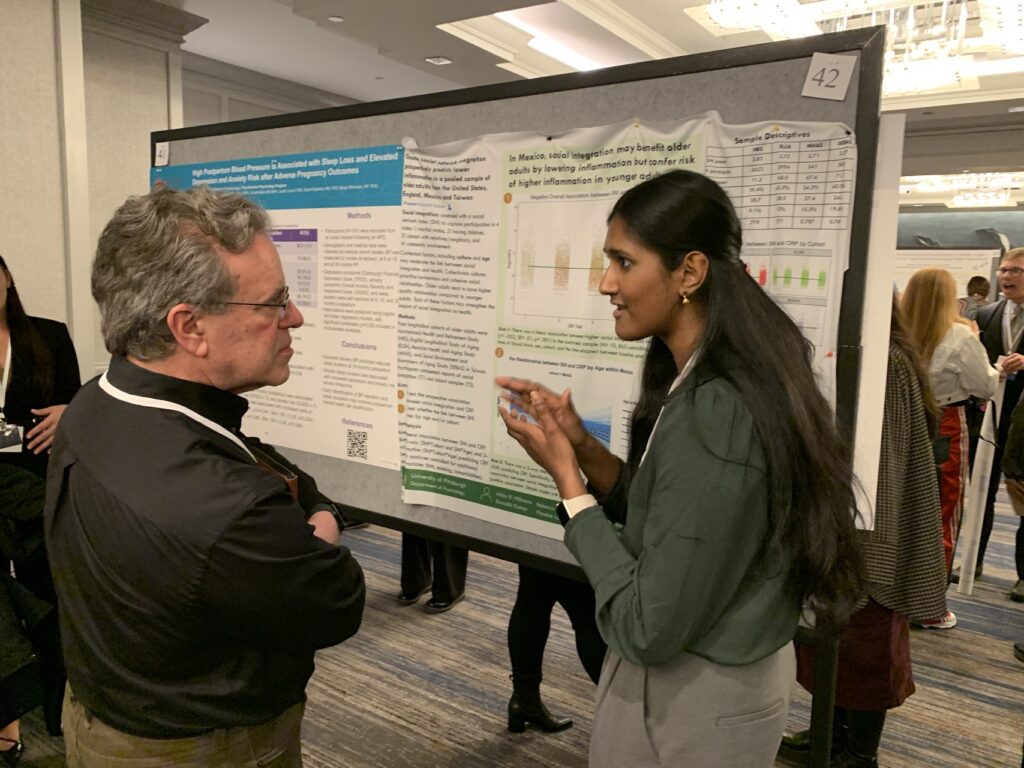
A poster presentation consists of research highlights that are visually presented on a moveable display. The area for displaying poster materials is 4 feet high by 4 feet wide. The poster boards you will be displaying your work require you to use velcro or push pins to set your poster up. Please do not exceed the 4 feet by 4 feet space allotted! You will receive your poster number prior to the meeting, along with set up and tear down times. Please mount your poster next to your number.
Here are a few hints for good poster presentations:
- Make your poster simple and eye-catching.
- Use simple drawings, diagrams, graphs and/or photographs
- Graphics should be explicit and brief
- Have clean and attractive layouts
- Use few panels, including an introduction/summary.
- Simple use of color can add emphasis effectively. The 6 best color combinations are:
-
- Black on white
- Red on white
- Green on white
- Blue on white
- White on blue
- White on black
- Use large print and a minimum of text
- Your poster should contain headings that organize and logically display the information.
- Bring handouts for distribution (500 attendees are expected).
- Remember, not all attendees will be fluent in English. Keep abbreviations and jargon to a minimum.
- Stay with your poster so attendees may confer with you.
Don’t forget to add the First Time Presenter, Biopsychosocial Science for the Greater Good, Community-Partnered Research, Climate and Sustainability or Clinically Relevant badges to your presentation if they apply. They can be download them from the tab below this one.
If you have any questions, please feel free to contact an SBSM team member at info@thesbsm.org.


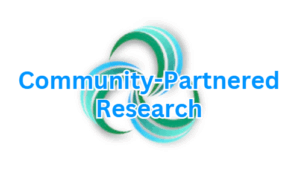
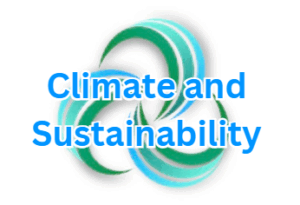
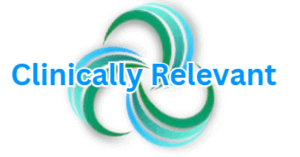
Presentation Badges are self-selecting and available to be added to your poster or presentation slides.
First Time Presenter: Is this the first time you will present at a society annual meeting? If so, we encourage you to apply our First Time Presenter Badge to your presentation slides or poster so that continuing members can welcome you to the meeting.
Biopsychosocial Science for the Greater Good: From viral and loneliness epidemics to societies fractured by discord, marginalization and discrimination of vulnerable populations, and economic and environmental stressors, biopsychosocial processes are critical to understanding and identifying solutions for key societal challenges. The Biopsychosocial Science for the Greater Good Initiative aims to highlight and promote member science that elucidates biopsychosocial mechanisms and solutions for vexing societal challenges. Does this apply to your presentation? Help us promote the contributions of biopsychosocial science to serve the greater good by applying our Greater Good Badge to your presentation slides or poster.
Community-Partnered Research: Intended for those who are presenting work that involves community members as valued partners in their research. This could include having community members as co-investigators or equal scientific partners, having community members participate on valued and active community advisory boards for the research, and many other manifestations. If you self-identify your work as community-partnered, community-engaged, community-based, or a different variant of any of these, please include this badge on your presentation slides or poster.
Climate and Sustainability: The Climate Change, Sustainability, and Health Special Interest Group seeks to increase awareness and visibility of climate-related environmental and sustainability challenges affecting human health. We hope to leverage the expertise of SBSM members to address these environmental challenges and their impact on public health. If your presentation addresses health outcomes linked to climate-related environmental or sustainability issues, please apply this Climate badge to your presentation slides or poster.
Clinically Relevant: If your presentation has direct or translational impact on health care delivery or public health programs, please apply this badge to your presentation slides or poster.
Instructions:
Right click on the image you wish to use, click copy image, then paste it onto your poster or slides in the upper left-hand corner.
SAVE THE DATE: 2027 Annual Meeting
Society for Biopsychosocial Science and Medicine
84th Annual Scientific Meeting
"Biopsychosocial Mechanisms of Restorative Practices for Health and Healing Across the Lifespan"
March 17-20, 2027
New Orleans, LA
In 2027, the Society for Biopsychosocial Science and Medicine will turn toward the science of restoration and healing for individuals, communities, and the world we inhabit. The 84th Annual SBSM meeting will highlight cutting-edge findings on the mechanisms underlying restorative practices, ranging from yoga, meditation, and lifestyle interventions to restorative justice and ecological renewal, as well as the biobehavioral, psychological, and social pathways promoting recovery and repair across the lifespan. There will also be a focus on the importance of engaging with communities to build and restore trust.